
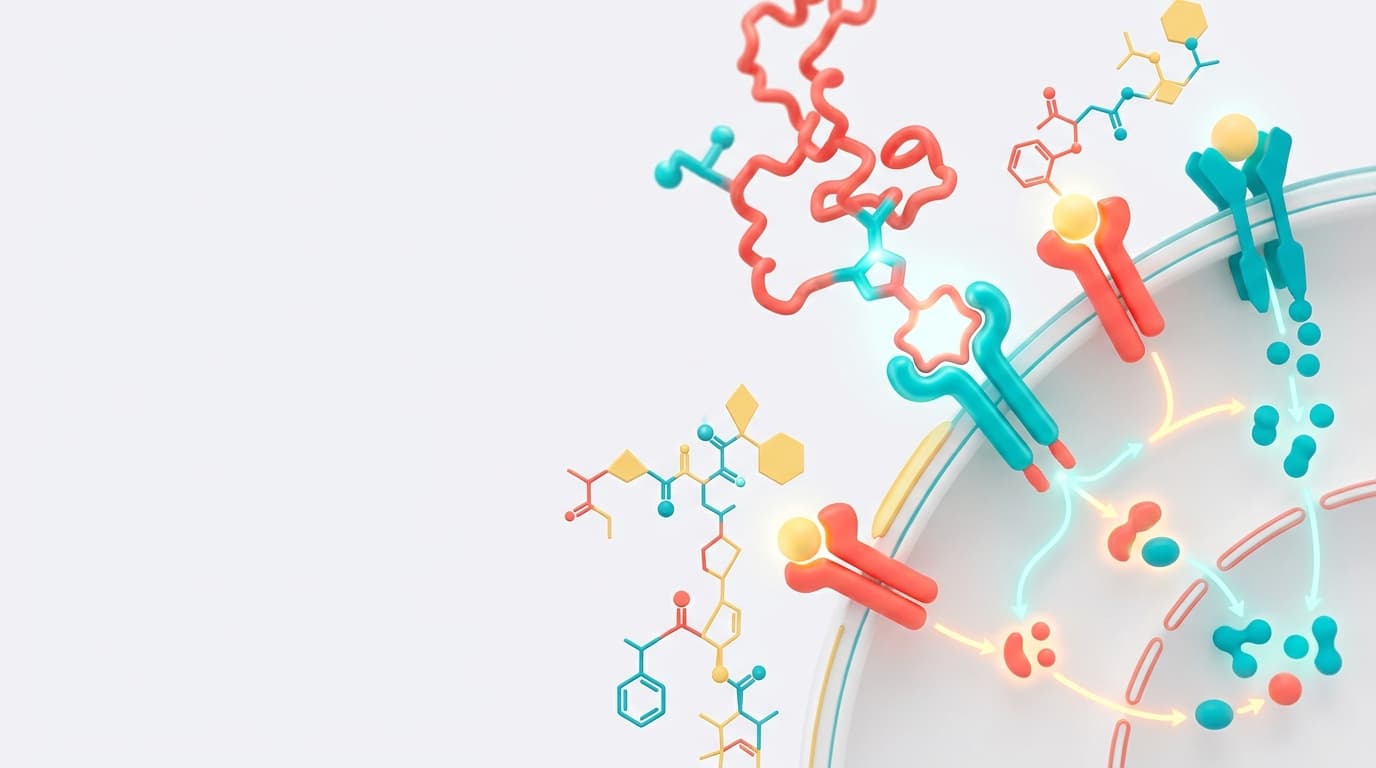
A central paradox in peptide pharmacology is that continuous, uninterrupted receptor stimulation often leads to diminished biological responsiveness over time. This phenomenon is governed by receptor desensitization and internalization.
The Molecular Mechanism:
When an agonist peptide continuously occupies a GPCR, G-protein receptor kinases (GRKs) phosphorylate the intracellular C-terminus of the receptor. This phosphorylation recruits beta-arrestin proteins, which physically uncouple the receptor from its G-protein partners, halting downstream signaling.
- 1Dephosphorylated and recycled back to the plasma membrane (resensitization), or
- 2Trafficked to lysosomes for enzymatic degradation (downregulation).
Pulsatile vs. Continuous Administration:
Peptides that stimulate endogenous endocrine axes—such as Growth Hormone Releasing Hormone (GHRH) analogs like Sermorelin and CJC-1295—are designed to mimic the natural pulsatile secretory bursts of physiology. Continuous high-dose exposure risks receptor downregulation and somatotroph exhaustion, whereas intermittent pulsatile administration preserves receptor responsiveness.