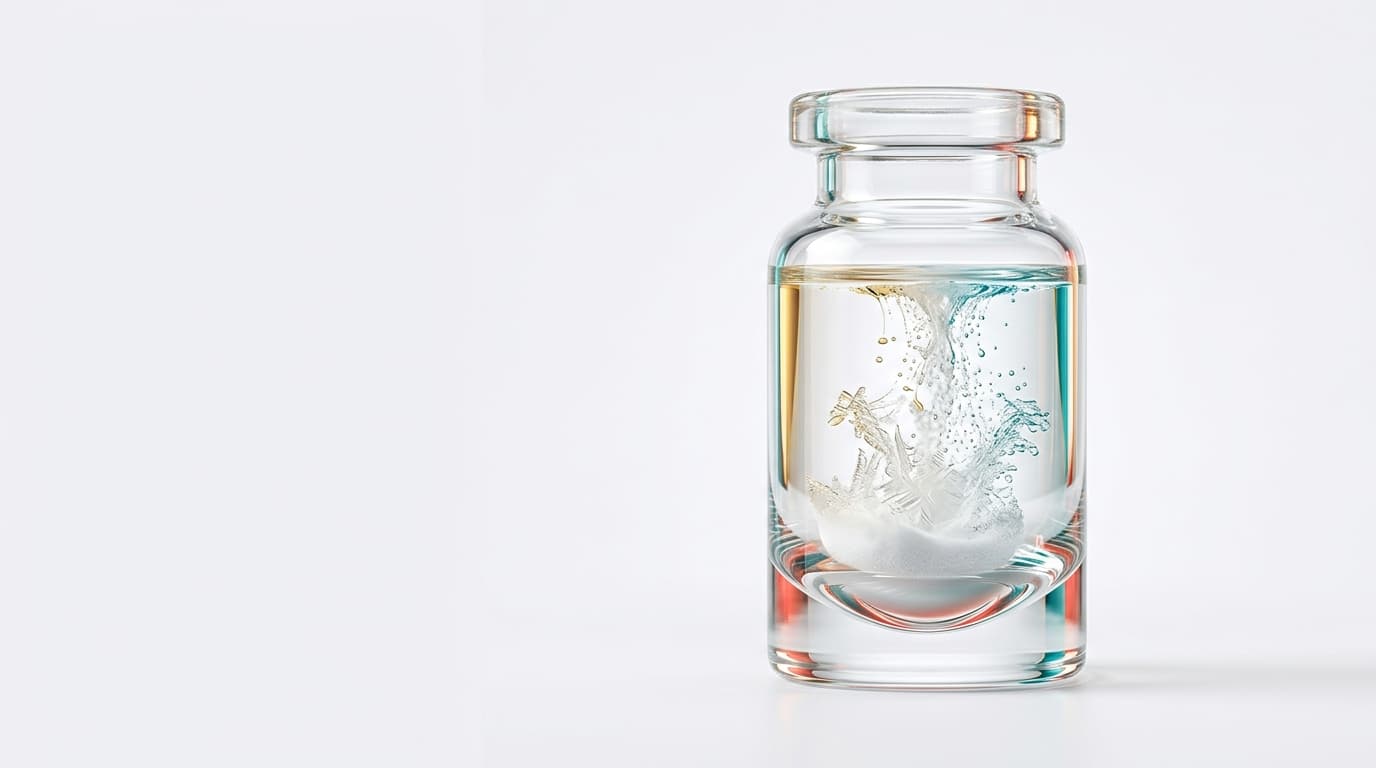
Educational principles on peptide reconstitution, solvent compatibility, bacteriostatic water sterility, and temperature-controlled storage.
Standard laboratory reconstitution of lyophilized cakes, bacteriostatic water dilution, sterile technique, and cold-chain storage at 2°C - 8°C.
Trans-mucosal absorption protocols bypassing first-pass hepatic metabolism for neuroactive peptides (such as Selank and Semax).
Specialized stabilized delivery matrices including arginate salts (BPC-157) and SNAC absorption enhancers for metabolic peptides.
Lyophilized peptide cakes are stable at controlled room temperature (20°C - 25°C) for short durations during transit, but should be stored at -20°C for long-term multi-year preservation shielded from moisture.
Once liquid bacteriostatic water is introduced, peptide chains become hydrolytically sensitive. Store immediately at 2°C - 8°C (refrigerator) and protect completely from ultraviolet light.
Never shake vials vigorously. Vigorous mechanical shear forces can disrupt tertiary folding. Gently swirl or roll the vial between palms until complete crystal clarity is achieved.
The universal laboratory solvent for multi-dose reconstituted vials. Benzyl alcohol acts as a bacteriostatic preservative preventing microbial and bacterial proliferation for up to 28-30 days refrigerated.
Prior to any reference draw, inspect reconstituted solution against strong backlighting. The solution must be crystal clear and free of floating flocculent particulate matter or discoloration. Turbidity indicates precipitation or microbial compromise.