
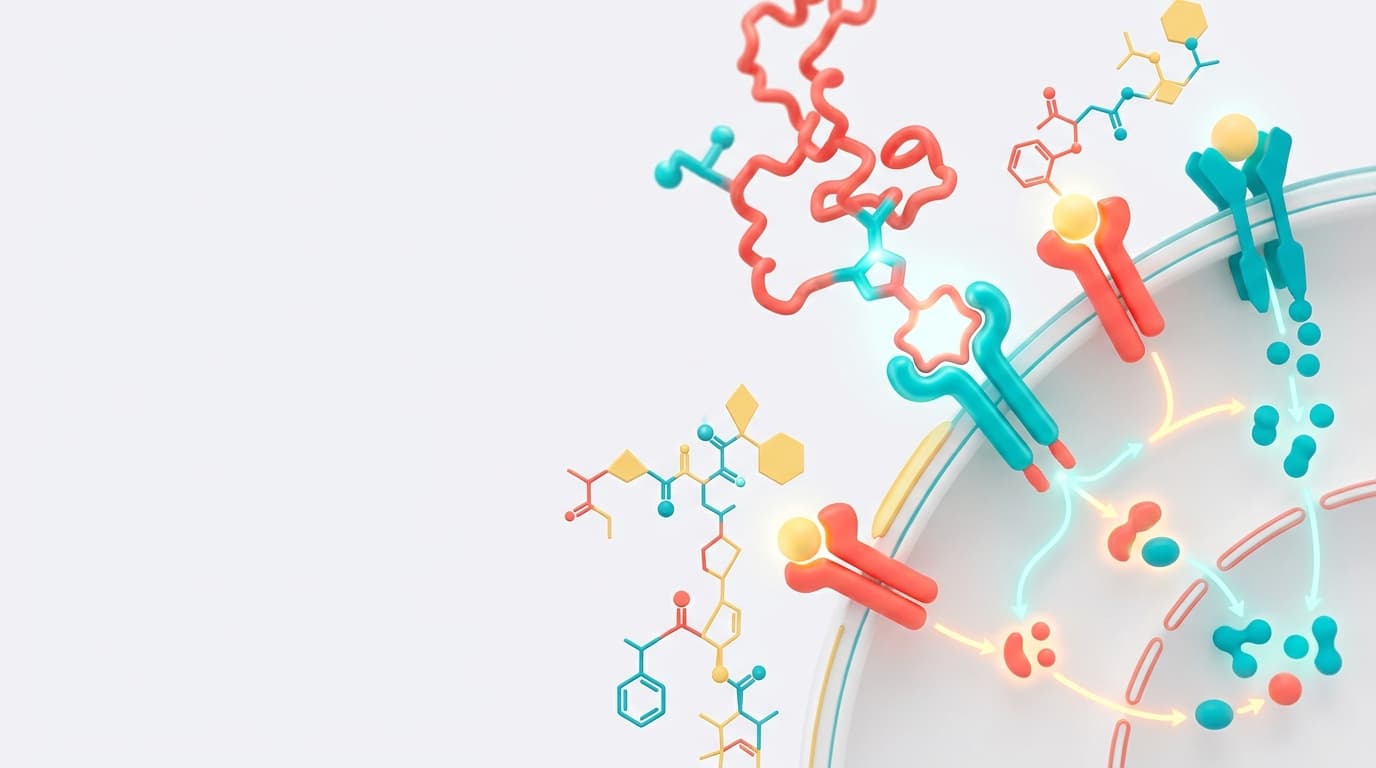
Peptides are biological molecules consisting of short chains of amino acid monomers linked by peptide (amide) bonds. By biochemical convention, chains containing between 2 and approximately 50 amino acids are classified as peptides, whereas larger polymers are termed proteins.
In human physiology, peptides function primarily as potent biological signaling agents: endocrine hormones, neurotransmitters, growth factors, and cytoprotective messengers.
Because of their targeted molecular conformation, bioactive peptides often bind to cell surface receptors (such as G-protein coupled receptors) with extreme specificity, yielding precise downstream cellular responses without broad off-target toxicities.