
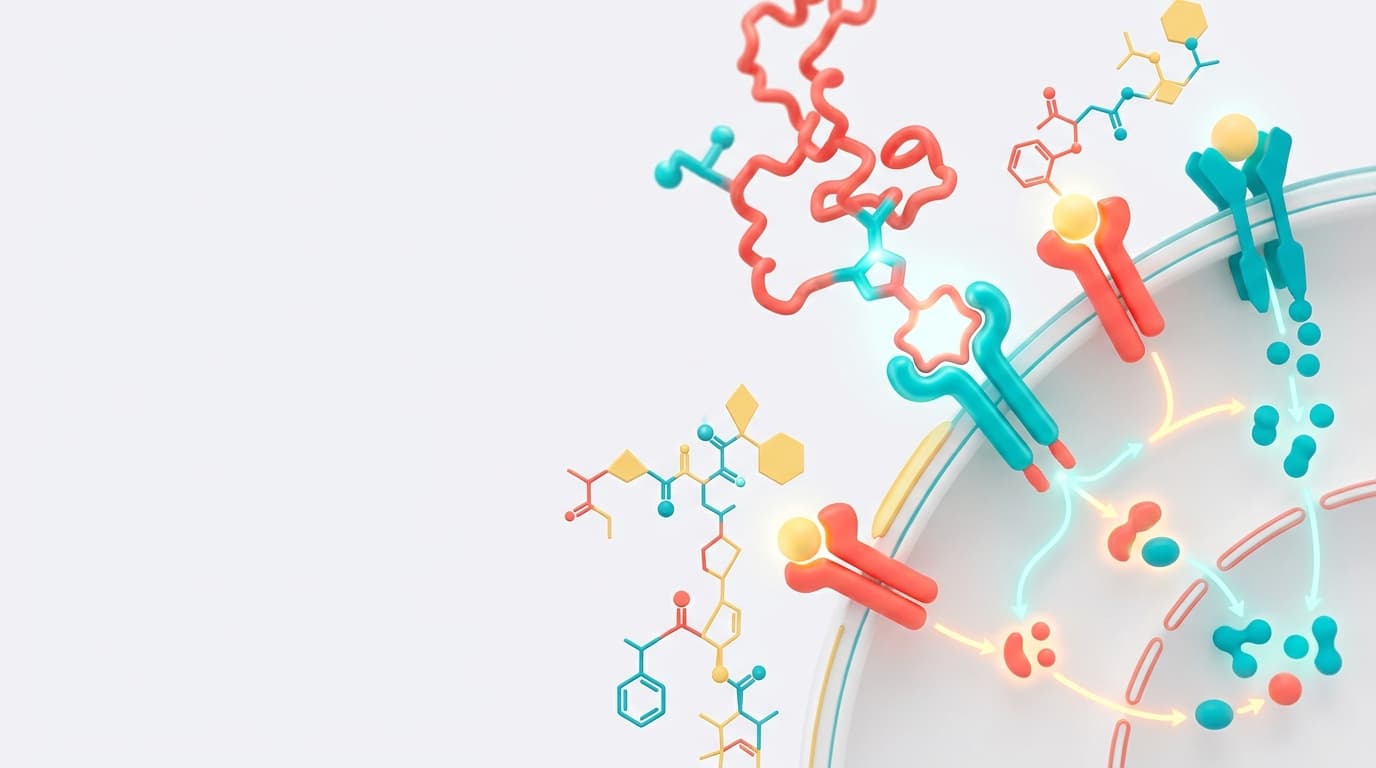
G-Protein Coupled Receptors (GPCRs) represent the largest and most pharmacologically critical family of cell-surface receptors in human physiology. Over 70% of therapeutic peptides exert their physiological effects by binding to GPCRs.
Structural Architecture:
GPCRs feature seven hydrophobic alpha-helical segments spanning the plasma membrane, connected by three extracellular and three intracellular loops. When a bioactive peptide docks into the extracellular ligand-binding pocket, it induces a conformational shift that activates intracellular heterotrimeric G-proteins (G-alpha, G-beta, and G-gamma).
- 1Gs Pathway: Activates adenylate cyclase, increasing cyclic AMP (cAMP) and activating Protein Kinase A (PKA). Examples include GHRH and GLP-1 signaling.
- 2Gq/11 Pathway: Activates phospholipase C (PLC), cleaving PIP2 into IP3 and DAG, triggering intracellular calcium release. Examples include ghrelin secretagogues and Kisspeptin-10.
- 3Gi/o Pathway: Inhibits adenylate cyclase, dampening cAMP and modulating neuronal firing.
Understanding which G-protein pathway a peptide recruits is essential for predicting downstream therapeutic and side-effect profiles.