
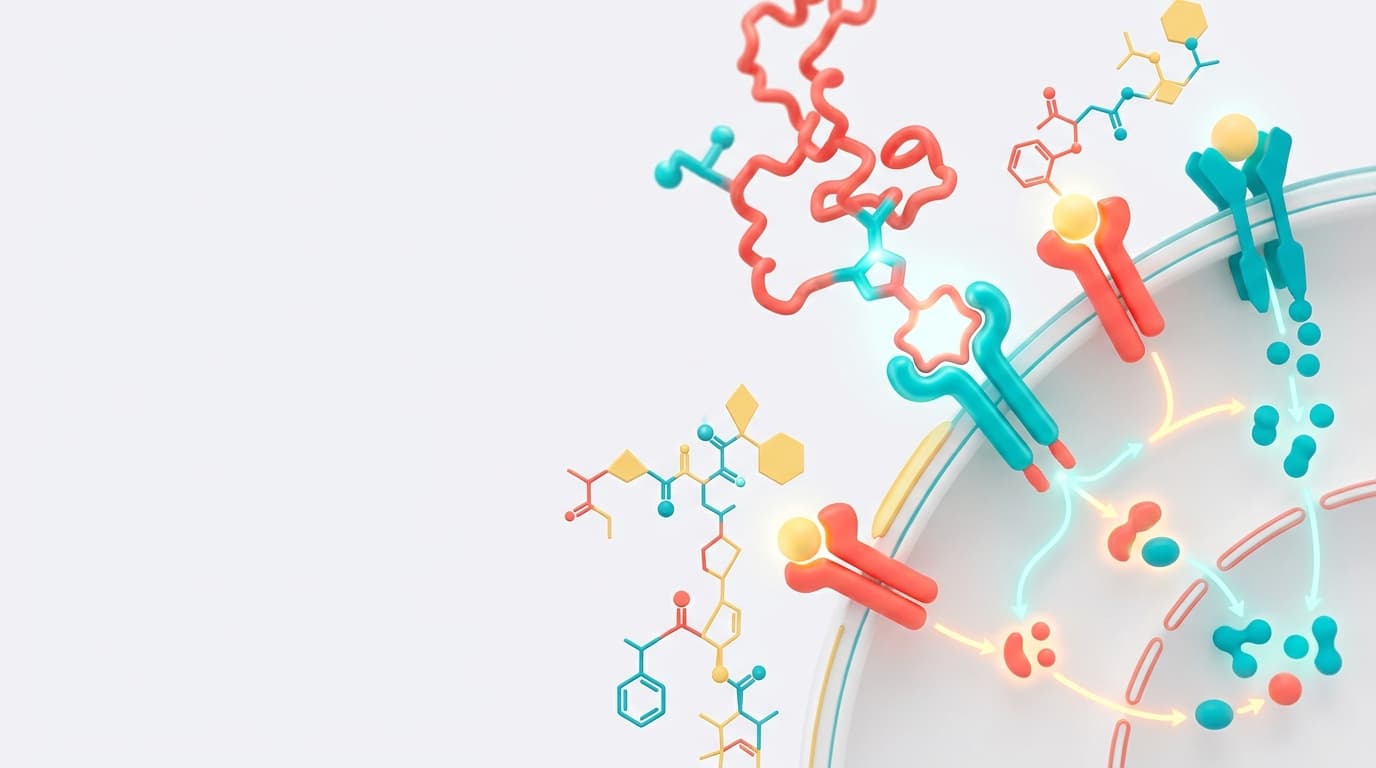
Bioactive peptides are biochemically fragile. Unlike rigid small-molecule drugs (such as aspirin), peptides exist in flexible conformational states vulnerable to hydrolysis, oxidation, and denaturation.
Lyophilization (Freeze-Drying):
Peptides intended for clinical and research use are synthesized and freeze-dried under vacuum into a solid, anhydrous crystalline cake. By removing water, the primary medium for chemical hydrolysis is eliminated, allowing un-reconstituted lyophilized vials to remain stable at -20°C for up to 24 to 36 months.
- 1Deamidation: Glutamine and asparagine residues undergo spontaneous hydrolytic deamidation into glutamic and aspartic acid, altering molecular charge.
- 2Oxidation: Methionine, cysteine, and tryptophan residues are highly susceptible to atmospheric oxidation, creating inactive sulfoxide derivatives.
- 3Aggregation & Fibrillation: Agitation or elevated temperatures cause peptide chains to uncoil and clump together into insoluble amyloid-like fibrils.
Best Practices:
Reconstituted peptide solutions must be stored between 2°C and 8°C (36°F to 46°F), never subjected to repeated freeze-thaw cycles, and shielded completely from ultraviolet light.