
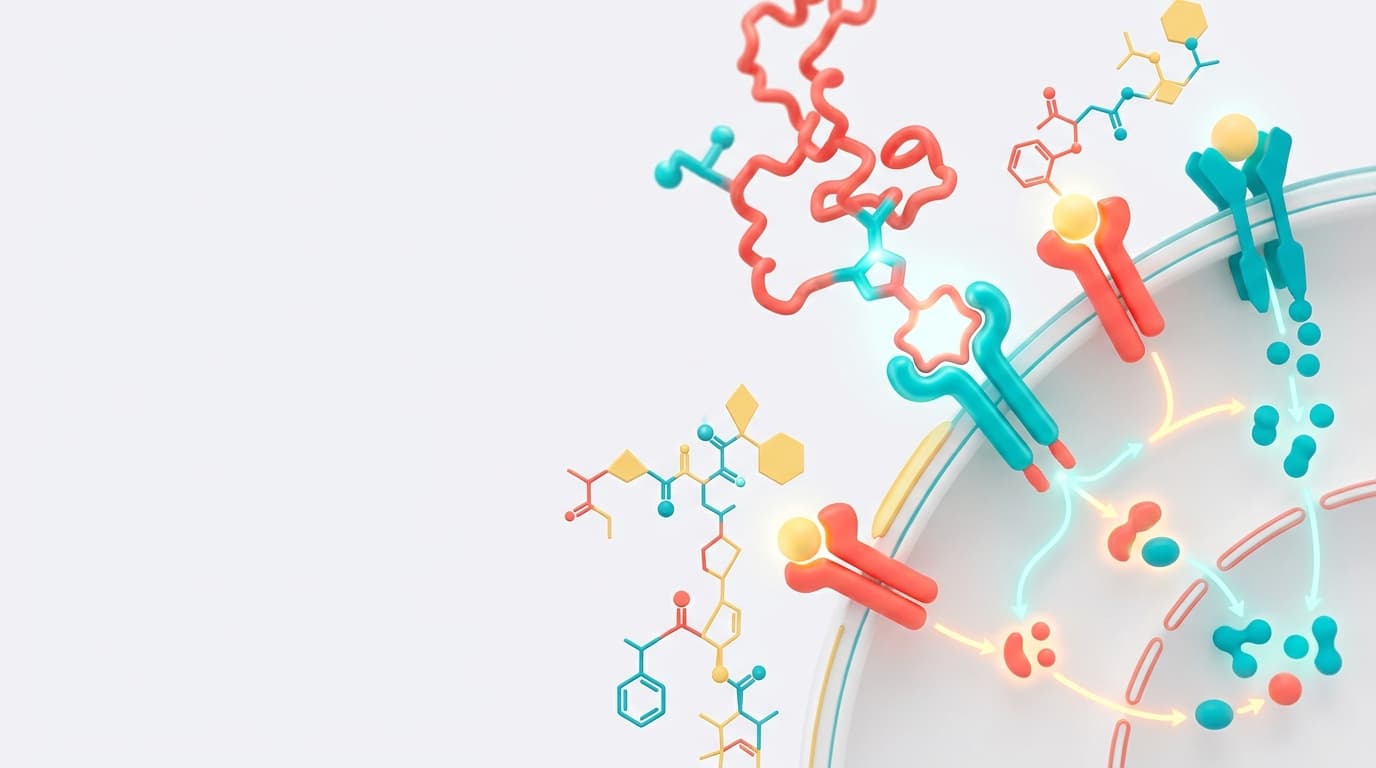
How did peptide therapeutics evolve from requiring multiple daily injections to convenient once-weekly subcutaneous administrations? The answer lies in reversible albumin binding technology.
Human Serum Albumin (HSA) as a Circulating Depot:
Albumin is the most abundant protein in human plasma (~40 g/L) with an exceptionally long physiological half-life of approximately 19 to 21 days, protected from lysosomal degradation by the neonatal Fc receptor (FcRn) cellular recycling mechanism.
- Semaglutide incorporates a C18 diacid chain at Lys26.
- Tirzepatide incorporates a C20 diacid chain.
Reversible Binding Equilibrium:
In the bloodstream, over 99% of the administered peptide binds non-covalently and reversibly to hydrophobic fatty acid binding pockets on albumin. This non-covalent association prevents glomerular filtration and protects the peptide backbone from circulating peptidases, creating a slow-release intravascular reservoir that sustains steady receptor activation over an entire 7-day dosing cycle.